Every "best garage floor" article on the internet seems to be written by someone selling exactly one of the options. We sell two of the seven — so we'll be straight about where the other five genuinely win. The quick comparison first, then the honest case for and against each.
| Option | Typical cost (2-car) | Lifespan | Install | Best for |
|---|---|---|---|---|
| 1. Flake epoxy system | ~$3,960 | 15+ years | Pro, 2 days | The everyday garage — best overall |
| 2. Quartz system | ~$6,600 | 15+ years | Pro, 2 days | Shops, wet areas, maximum durability |
| 3. One-day polyurea | Varies — get it in writing | Depends on prep | Pro, 1 day | When the schedule truly can't flex |
| 4. Interlocking tiles | $800–$2,000 DIY | 5–10 years | DIY, a weekend | Renters & short-timers |
| 5. DIY epoxy kit | $150–$600 DIY | 1–3 years | DIY, a weekend | Short-term cosmetic refresh |
| 6. Roll-out mats | $400–$1,200 DIY | 3–7 years | DIY, an afternoon | Instant cover, zero commitment |
| 7. Stain / sealer / paint | $100–$500 DIY | 1–2 years | DIY, a weekend | Looks on a budget, not protection |
1. Flake epoxy system — best overall
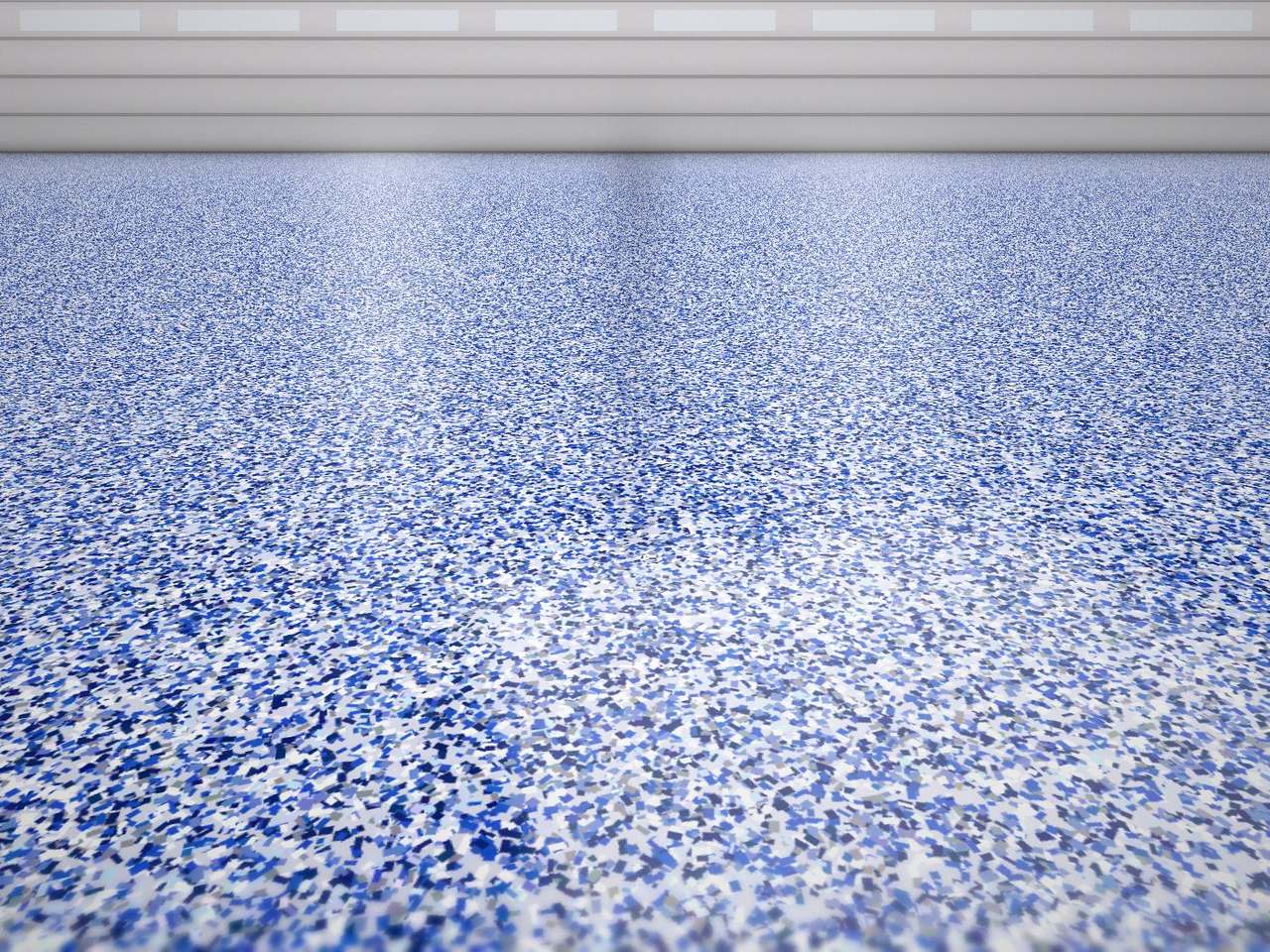
The full professional system: diamond-ground concrete, a penetrating epoxy base, a broadcast layer of vinyl color flakes, and a UV-stable polyaspartic topcoat. It's the default answer for a reason — the flake layer hides dust and tire marks inside its pattern, the texture adds grip without being aggressive, and the seamless surface cleans with a squeegee. At our published rate of $9 per square foot it's also the cheapest of the professional options. The honest downside: it's a permanent improvement to a home you should plan to keep, and you'll wait two days to park on it. Full pricing breakdown in our cost guide.
2. Quartz system — most durable
Same four-layer construction, but the decorative layer is colored quartz granules instead of vinyl flake. The result is a denser, harder wear surface with noticeably better slip resistance — the reason it's the standard spec for pool decks, commercial kitchens, and working shops. At $15 per square foot it costs more than flake, and for a garage that mostly parks cars it's genuinely more floor than you need. If your garage doubles as a shop, or the space gets wet, quartz is the best floor money can buy.
3. One-day polyurea — fastest professional option
The franchise favorite. Real strengths: professional equipment, genuine prep (usually), and you park the next morning. Our reservation is the physics of the schedule — a base coat that cures in minutes has minutes to bond with the slab, and the one-day promise leaves no cushion when grinding uncovers problems. We wrote a whole piece on this tradeoff: Polyurea vs. Epoxy. If you go this route, ask exactly what happens when the crew finds moisture or bad concrete at 10 a.m. with a 5 p.m. finish promised.
4. Interlocking tiles — best for renters
PVC or polypropylene tiles that snap together over the bare slab. No cure time, no chemicals, and — the part that matters — they come with you when you move. If you rent, tiles are flatly the right answer and we'll tell you so on the phone. The tradeoffs: grit and moisture migrate through the seams onto the concrete underneath, heavy point loads (jack stands) can dent them, and they're a cover for the slab rather than protection of it. The oil that reaches the concrete still stains it.
5. DIY epoxy kit — best short-term refresh
The $150–$600 big-box weekend project. It photographs great on day one. The problem is bond: kit epoxy is thin and goes over concrete that's been cleaned, not ground, so the classic failure — hot-tire peel — usually arrives within one or two Texas summers. Fair use case: you're selling the house soon and want the garage to show well. Bad use case: you plan to stay, because a failed kit has to be ground off (at your expense) before a real coating can go down.
6. Roll-out mats — instant, zero commitment
Vinyl or rubber sheets you unroll like a rug. Fastest option on this list and kind to knees and dropped tools. But mats trap moisture against the slab (a real issue in humid North Texas), creep and wrinkle under turning tires, and collect grit underneath. Think of them as garage carpet: fine for a home gym corner, not a floor solution.
7. Stain, sealer, or floor paint — looks only
An acid stain with a sealer can make interior concrete gorgeous, and we'd recommend it for a patio you don't drive on. In a working garage, thin films lose to hot tires, oil, and abrasion — usually within a year or two. Floor paint is the same story with less charm. If the budget only allows a few hundred dollars and you need actual durability, tiles beat paint every time.
The verdict, by situation
You own your home and use the garage daily: flake epoxy system — best durability-per-dollar there is. Your garage is a shop, or the surface gets wet: quartz. You rent or you're moving within two years: interlocking tiles, no contest. Selling soon and staging: a DIY kit is fine — just disclose it. Budget under $500 but you'll stay a while: save up for the real thing; a failed cheap coating costs more to remove than it cost to install.
If you've landed on a professional system, the numbers are all published in our cost guide, and the colors are browsable on our floor colors page. We install both flake and quartz across Dallas–Fort Worth — from Weatherford and Granbury to Burleson and Cleburne — plus commercial floors metroplex-wide.